


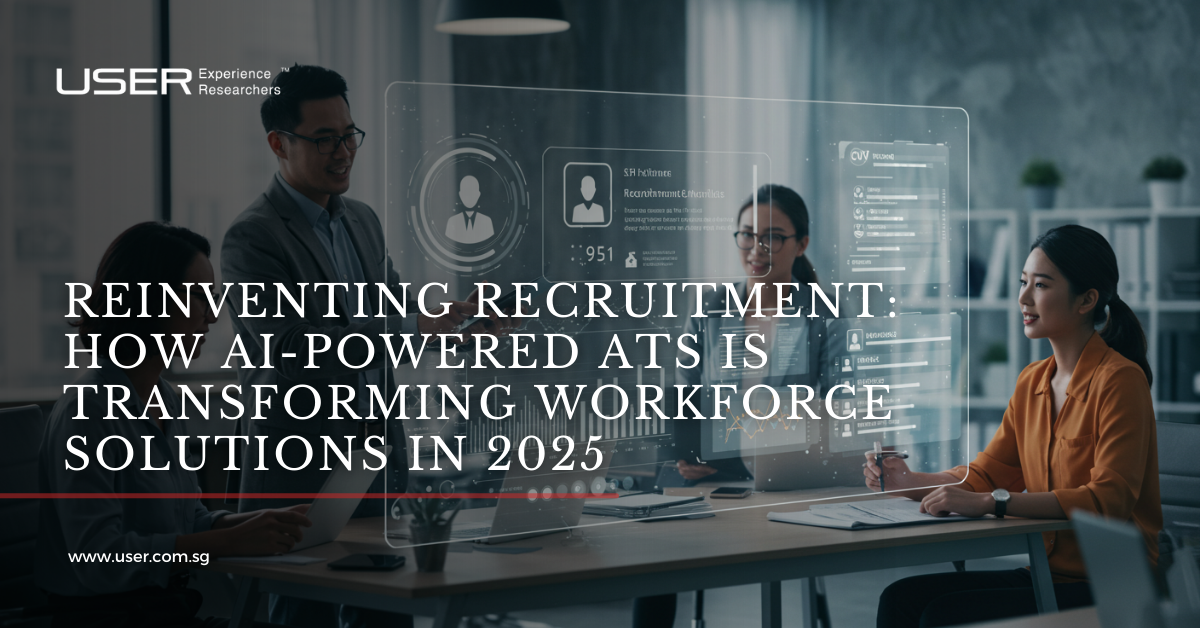


Reinventing Recruitment: How AI-Powered ATS is Transforming Workforce Solutions in 2025
By 2025, 87% of companies are using AI-driven tools in recruitment, with more than 65% of recruiters reporting that AI helps them save time and improve candidate sourcing. Some organisations even report a 30% reduction in hiring costs thanks to AI-powered systems.
This means that for many job seekers today, the first “person” reviewing their CV is not human, it is artificial intelligence.
The New Face of Recruitment
Recruitment has changed dramatically over the past two decades. From newspaper ads and walk-in applications to online job boards and LinkedIn, the way organisations connect with talent has always evolved with technology. But 2025 marks a tipping point: recruitment is now being shaped by AI-powered Applicant Tracking Systems (ATS).
An ATS was once a digital filing cabinet, storing and organising CVs. Today, it has evolved into a powerful engine that can read CVs, evaluate skills, match job criteria, and provide recruiters with a shortlist of candidates, all in minutes.
A 2025 report revealed that 99% of hiring managers now use AI in recruitment, and 98% say it has improved efficiency, while 93% highlight that human oversight remains essential. These numbers make it clear: AI is no longer a trial; it has become an indispensable part of workforce solutions.
So, what does this mean for businesses trying to attract talent and for candidates navigating this new landscape?

From Sorting Files to Smart Screening
The earliest versions of ATS were essentially keyword scanners. They worked by filtering CVs that contained specific terms, such as “project management” or “sales strategy.” While this made sense in theory, it often led to strong candidates being rejected because their CVs were worded differently or lacked the exact keywords.
Modern AI-powered ATS goes beyond that. These systems now:
- Interpret context: Instead of looking for keywords only, AI can recognise related skills. For instance, a candidate who lists “Python” and “data analysis” may be flagged as suitable for a data science role, even if “data scientist” is not written.
- Read multiple formats: They can handle CVs in PDF, Word, or even LinkedIn profiles, making them more versatile.
- Integrate assessments: Some ATS now include skill tests, video interviews, and personality assessments, creating a more rounded view of the candidate.
This shift has freed recruiters from hours of manual filtering, allowing them to focus on personal interactions and culture fit, which are far more valuable to the hiring process.
The Benefits of AI in Recruitment
Efficiency at Scale
In industries like healthcare or logistics where hundreds of roles may need to be filled quickly, AI drastically cuts down hiring time. For example, a hospital group in Southeast Asia recently processed 3,000 nursing applications in less than a week, a task that previously took almost a month. This meant more staff on the ground and faster patient care.
Fairer and Consistent Screening
AI does not get tired or distracted. It applies evaluation criteria consistently, giving each candidate a fairer chance at being considered. A retail chain in Europe used AI to review seasonal worker applications and found 15% more qualified candidates compared with manual screening, simply because the system was able to spot transferable skills human recruiters had overlooked.
Enhanced Candidate Experience
One of the biggest frustrations for job seekers has always been silence, submitting applications without hearing back. AI-driven ATS now provide automatic updates, keeping candidates informed at every step. A logistics firm in Singapore saw a 25% increase in positive candidate feedback after adopting an ATS that sent personalised updates, improving its reputation as an employer of choice.
Together, these benefits demonstrate how AI is not only streamlining recruitment but also making it fairer, faster, and more engaging for both businesses and applicants.
Industries Benefiting Most from AI in Recruitment
AI in recruitment is not one-size-fits-all; its impact varies by industry:
- Healthcare: Hospitals and clinics can rapidly place medical staff, reducing critical hiring delays.
- Retail & Logistics: Seasonal demand surges are managed efficiently through AI’s scalable screening.
- Technology: Specialised skill talent, such as cybersecurity experts, are identified among global applicants.
- Finance: Precision and compliance are maintained by ensuring candidates meet strict criteria before consideration.
Moreover, research shows that some of the most AI-exposed industries have seen nearly triple the productivity growth per employee compared to those least exposed, underscoring how AI fosters real economic gains across sectors.
By tailoring AI recruitment strategies to industry-specific needs, businesses gain a real competitive advantage.

Challenges and Ethical Considerations
While the benefits are clear, AI recruitment comes with challenges that businesses must handle carefully.
Bias and Data Quality
If AI systems are trained on biased data, they may replicate those biases. For example, if past hiring data favoured certain schools or backgrounds, the AI may continue doing so. To prevent this, companies must regularly audit their systems and feed them diverse, inclusive datasets.
Candidate Perception
Not all candidates are comfortable with the idea of AI evaluating their CVs. Some feel it removes the “human touch” from hiring. Employers need to be transparent, explaining how AI is used, and reassuring candidates that humans remain in the loop.
Skill and Training Gaps
While AI tools are widespread, not all HR teams know how to use them effectively. A recent McKinsey study found that employees are using generative AI far more than leaders expect, which highlights the need for structured training and governance.
These challenges remind us that AI should augment human recruiters, not replace them.
The Next Evolution of AI in Recruitment
AI in ATS is not standing still. In 2025, one of the biggest emerging trends is agentic AI, AI systems that act with goals rather than just prompts. This means recruitment platforms may soon be able to anticipate workforce needs, proactively source talent before roles are even advertised, and adjust strategies based on market shifts.
For example, an AI system might notice a surge in demand for cybersecurity roles in finance and start building a candidate pipeline weeks before hiring managers request it. This type of predictive capability could transform recruitment from a reactive process into a dynamic, forward-looking strategy.
Designing the Future of Workforce
AI in recruitment is no longer an experiment. It is here shaping how businesses find and hire talent. The companies that succeed will be those that use AI to remove inefficiencies and bias while elevating human judgement and connection.
Recruitment has always been about people. With AI, we now have the tools to make the process smarter, more transparent, and more effective for everyone involved.
USER is a leading UX-focused company specialising in digital transformation, agile development, and workforce solutions. We help organisations design recruitment systems that are fast, fair, and human-centred, using AI responsibly to strengthen the hiring process.
For more information, contact USER at project@user.com.sg.